




- Confirm your truck’s weight ratings (GVWR, GCWR, payload, and tongue weight) before shopping for a travel trailer.
- Use the right hitch setup and braking support so your trailer tows straight and stops predictably.
- Load for balance and run a consistent pre-trip check to avoid sway, overheating, and roadside surprises.
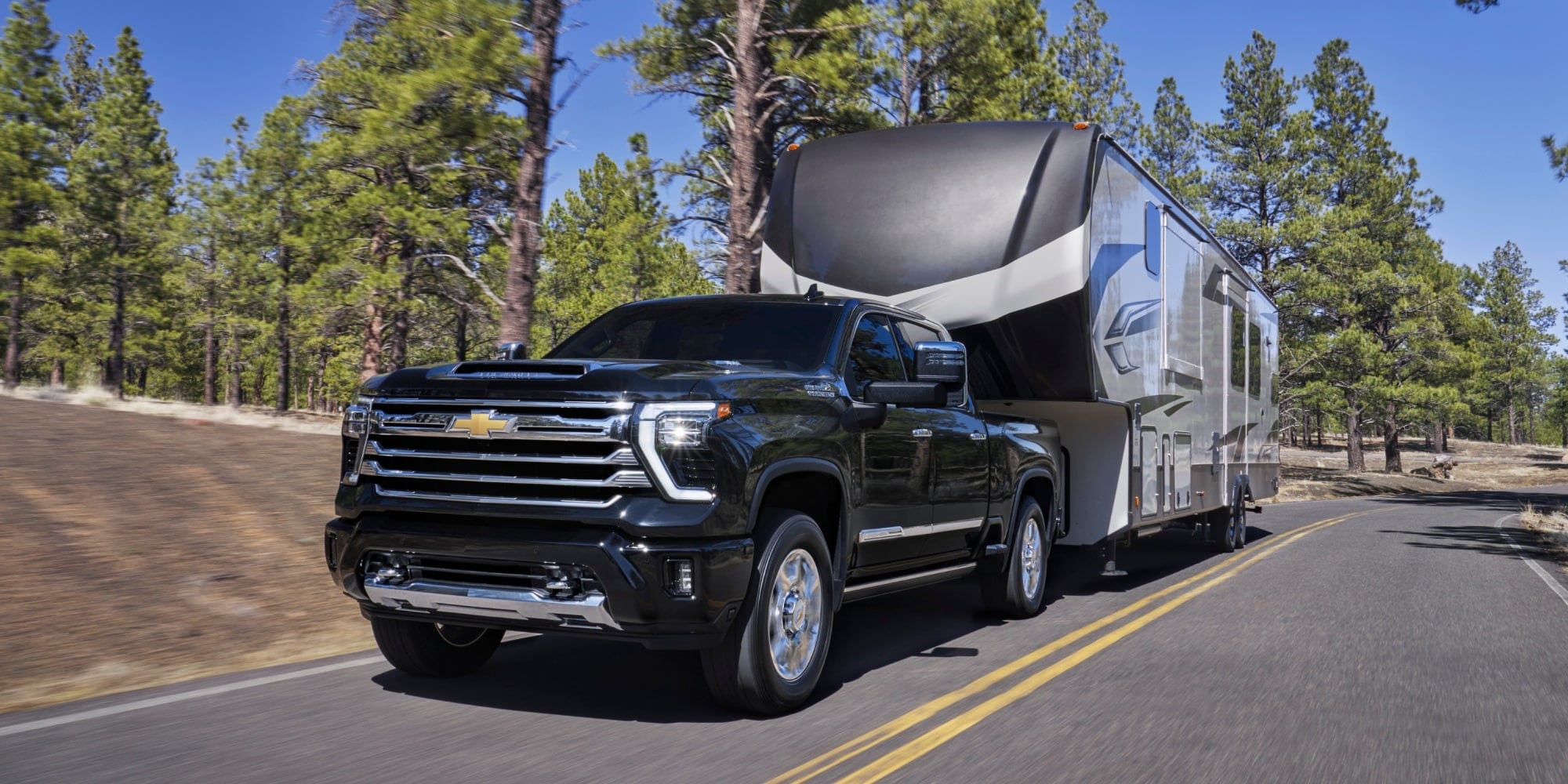
Ready for your first towing adventure? We get it - there's excitement mixed with a healthy dose of questions about whether you're doing everything right. At Victorville Chevrolet, we help High Desert drivers prep their Chevy trucks for towing travel trailers every day. The process isn't complicated once you know what really matters, and we will walk you through the key steps.
Why Chevy Trucks Are Built for Towing in the High Desert
Chevy trucks roll off the line designed specifically for towing demands. The Silverado lineup comes with robust frames, powerful engine options, and advanced suspension systems that handle weight confidently. These aren't just sales pitches - they're real engineering priorities built into every truck.
Our High Desert terrain throws some serious curveballs. Steep grades, wild temperature swings, and road conditions that change mile by mile. You need trucks that deliver steady power and rock-solid stability. Chevy engineers design for exactly these challenges, which is why we see Silverados pulling confidently through Cajon Pass and across desert highways every single day.
Modern Chevrolets integrate their towing tech as one complete system. Trailer sway control works with hill start assist, which connects to the transmission's tow mode. Your truck becomes more capable when you set it up right, which is exactly what this guide covers.
Understanding Your Chevy Truck's Towing Capacity
Think of towing capacity as a hard limit, not a suggestion. Push beyond it and you're stressing your engine, transmission, brakes, and frame in ways they weren't designed to handle. Worse yet, you're risking everyone's safety on the road.
Your owner's manual has the specific numbers for your exact truck configuration. Different engines, axle ratios, and cab styles change what your Silverado can safely pull. We tell every customer to find these specs before they even start shopping for trailers.
Key Weight Ratings Every Tow Driver Should Know
Gross Vehicle Weight Rating (GVWR) tells you the maximum your truck can weigh when fully loaded. This includes passengers, cargo, fuel - everything. You'll find this number on the label inside your driver's door frame.
Gross Combined Weight Rating (GCWR) represents the total allowable weight of your loaded truck plus your loaded trailer. This rating determines your trailering capacity.
Tongue weight describes the downward force your trailer puts on the hitch ball. You want between 10% to 15% of your trailer's total weight here for good handling. Too little creates dangerous sway; too much overloads your truck's rear end.
Payload capacity gets tricky because tongue weight counts against it. Say your Silverado handles 2,000 pounds of payload and your trailer tongue weight hits 800 pounds. You've got just 1,200 pounds left for people and stuff in the truck.
Matching Your Travel Trailer to Your Truck
Find your truck's maximum towing capacity in the owner's manual first. Then subtract 10-15% as your safety buffer. This accounts for extra gear you'll inevitably add and gives you margin for tough conditions like headwinds or mountain climbs.
Look at the travel trailer's actual weight, not that misleading dry weight. Dry weight skips water, propane, batteries, and all your personal stuff - items that add serious pounds. The trailer's GVWR shows its maximum loaded weight.
Calculate tongue weight carefully. If you're eyeing a trailer close to your truck's limits, come see us to talk through your specific setup. Our team knows the exact specifications for every Silverado and can help you pick an appropriately sized trailer.
Selecting the Right Hitch and Brake Setup
Your hitch literally connects everything together. Get this wrong and you compromise safety, damage equipment, and create potential liability issues. Worth getting right from day one.
Choosing the Correct Hitch Class
Hitches break down into five classes by weight capacity. Class I and II handle lighter loads up to 3,500 pounds - fine for small utility trailers but not enough for most travel trailers. Class III hitches work for trailers up to 8,000 pounds, covering many lightweight travel trailers. Class IV reaches 12,000 pounds and handles most conventional travel trailers. Class V supports loads beyond 12,000 pounds for large fifth-wheels and heavy conventional trailers.
Your hitch ball size must match your trailer coupler exactly. Standard sizes are 1-7/8-inch, 2-inch, and 2-5/16-inch. A 2-inch ball fits Class III hitches and many mid-size trailers. Larger trailers usually need 2-5/16-inch balls. Don't guess - check your trailer's required ball size before buying.
Weight distribution hitches become essential when tongue weight exceeds your truck's rear axle capacity or lifts your front end. These systems spread weight across all axles, improving handling and braking response. Plenty of Silverado owners towing travel trailers benefit from weight distribution setups.
Sway control devices cut down trailer movement from wind, passing semis, or rough roads. Friction sway control bolts to the trailer frame, while integrated systems work through your weight distribution setup. Both improve stability and make you feel more confident behind the wheel.
Installing a Brake Controller for Safe Stopping
Here's something many first-time towers don't realize: electric trailer brakes need a brake controller installed in your truck. This isn't optional, it's required for safe operation. Without a controller, your trailer's brakes don't work at all, leaving just your truck's brakes to stop all that combined weight.
Brake controllers send electrical signals to activate your trailer's brakes alongside your truck's system. Time-delayed controllers work on a preset timing, while proportional controllers sense your truck's deceleration and match trailer braking accordingly. Proportional units give smoother, more natural stops.
We install brake controllers regularly at Victorville Chevrolet and integrate them properly with your Silverado's electrical system. Professional installation prevents function issues and electrical headaches later.
Loading Your Travel Trailer for a Balanced Tow
Poor loading causes more towing problems than anything else. How you distribute weight affects handling, tire wear, brake performance, and fuel economy.
Stick to the 60/40 rule: put 60% of your cargo weight ahead of the trailer axle, 40% behind it. This keeps proper tongue weight and prevents sway. Heavy stuff goes low and centered near the axle. Lighter items can go in overhead compartments or toward the back.
Water tanks change your weight dramatically. A full fresh water tank adds roughly 8 pounds per gallon. Your trailer holds 50 gallons? That's 400 pounds right there. Many experienced towers travel with minimal water and fill up at their destination to keep towing weight down.
Lock everything down before you move. Shifting cargo changes your weight distribution and creates safety hazards. Use tie-downs, load bars, and storage bins to keep everything stable.
Weigh your loaded trailer when possible. Truck stops with scales let you verify actual versus estimated weight. We have seen towers shocked by how fast camping gear, food, and supplies pile on the pounds.
Your Pre-Trip Safety Checklist Before Leaving Victorville
A good pre-trip inspection takes maybe 15 minutes and prevents roadside disasters. Check these items before every trip, not just your first one.
Truck Inspection Points
Tire Pressure and Condition
Check all four tires plus your spare. Towing demands maximum inflation pressures from your door jamb sticker. Look for adequate tread depth and sidewall damage.
Brake System
Make sure your truck's brake pads have decent thickness left. Check brake fluid level and color. Listen for weird noises during a test stop.
Lights
Test headlights, taillights, brake lights, and turn signals. Replace burned-out bulbs before you leave.
Fluid Levels
Check engine oil, coolant, transmission fluid, and brake fluid. Top off anything that needs it. Towing works your truck's systems harder than regular driving.
Engine Condition
Fire up your truck and listen for smooth operation. Odd noises, rough idling, or warning lights need attention before you hook up a trailer.
Trailer and Connection Checks
Hitch Ball Security
Verify your hitch ball meets proper torque specs. The trailer coupler should seat fully on the ball with the locking mechanism engaged solid.
Safety Chains
Cross safety chains under the tongue in an X pattern. Leave enough slack for turning but don't let them drag the pavement. Check for damage or weak links.
Trailer Lights
Test brake lights, turn signals, and running lights with someone helping. Make sure everything functions correctly. Pack spare bulbs and fuses.
Trailer Tires
Check pressure against specs on the trailer sidewall. Look at tread and sidewalls for problems. Trailer tires age out after 5-7 years regardless of tread condition.
Electric Brake Controller Function
Use manual brake activation on your controller to confirm trailer brakes engage. Adjust gain settings based on your trailer weight.
Cargo Security
Walk through your trailer and confirm everything's locked down tight. Close and latch all cabinets, drawers, and exterior storage compartments.
Trailer Level
When hooked up, your trailer should sit level front to back. Adjust your weight distribution hitch if needed. Tongue-high or tongue-low means improper setup.
Mirrors
Ensure clear visibility past both sides of your trailer. Silverados with available tow mirrors give excellent visibility, or add extension mirrors when needed.
Get Your Chevy Truck Towing-Ready at Victorville Chevrolet
Our Towing Services and Support
Prepping your Chevy truck for towing a travel trailer comes down to understanding your truck's limits, choosing the right equipment, and following solid preparation steps. We've covered the essentials, from weight ratings and hitch selection to loading strategies and pre-trip inspections.
At Victorville Chevrolet, we deliver more than trucks. We provide the know-how to use them confidently. Our service team installs hitches, sets up brake controllers, and handles pre-trip inspections. We help match your Silverado to appropriate trailers and answer questions about towing capacity, payload limits, and equipment choices.
Visit Us for Your Towing Setup
Buying your first travel trailer or upgrading to something bigger? We'll guide you through the process. Our factory-certified technicians understand the specific capabilities and requirements of every Silverado model we sell.
Stop by our dealership at 15425 Dos Palmas Road or call us at (760) 684-4818. We'll look at your truck, discuss your towing plans, and make sure you have the right setup for safe, confident towing. Contact us to schedule a service appointment or talk with our parts department about towing accessories.
Your next adventure starts with proper preparation. Let us help you get there safely.
Frequently Asked Questions
How do I find my Chevy truck’s towing capacity?
Use your owner’s manual for your exact configuration (engine, axle ratio, cab/bed, and equipment). Treat towing capacity as a hard limit and build in a 10–15% buffer for gear and tough conditions.
What tongue weight should my travel trailer have?
Aim for about 10% to 15% of the trailer’s total weight on the hitch ball. Too little tongue weight can cause sway, while too much can overload the rear of the truck and reduce stability.
Do I need a brake controller to tow a travel trailer?
If your trailer uses electric brakes, you need a brake controller so the trailer brakes activate with the truck. This helps the whole combination stop smoothly and safely instead of relying only on the truck’s brakes.
Categories:
Towing