



- Auto 4x4 helps handle rapid transitions between pavement, dirt, and washboard without constant driver input.
- 4 High delivers steady traction for loose sand and gravel to help maintain momentum on High Desert routes.
- 4 Low maximizes torque for steep grades, rock crawling, and controlled descents with added tools like Hill Descent Control and locking differentials.
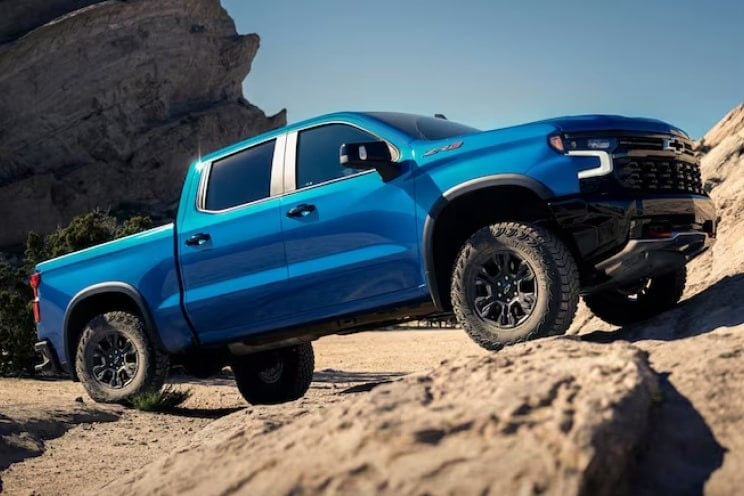
The High Desert around Victorville presents a unique proving ground for four-wheel drive systems. Rocky washes transition into deep sand within minutes. Steep grades cut through decomposed granite hillsides. Flash flood channels leave unpredictable ruts across backcountry roads. At our dealership, we help drivers understand how the Chevrolet 4x4 system addresses these exact conditions.
Chevrolet's approach combines multiple drive modes with terrain-specific tools. Rather than a single on-off switch, the system adapts to whatever the terrain throws at it.
Why High Desert Terrain Demands Capable 4x4 Systems
Loose sand dominates many High Desert trails, especially in the Mojave River washes north of Victorville. Your tires need constant power distribution adjustments to maintain forward momentum without digging in. Engaging all four wheels simultaneously when traction becomes compromised makes the difference between progress and getting stuck.
Rocky paths create another challenge. Sharp angles and sudden elevation changes require precise torque control. The capability gap between two-wheel and four-wheel drive becomes obvious when you're crawling over basketball-sized boulders without losing momentum or damaging your undercarriage.
Temperature swings add complexity. Morning trails can be firm and fast, but afternoon sun softens sand and makes previously solid surfaces treacherous. A capable system addresses these rapid changes without requiring constant manual adjustments from the driver.
How Chevrolet's 4x4 Modes Work
Chevrolet engineers designed their four-wheel drive systems around real-world desert conditions. The system offers three distinct modes, each calibrated for specific terrain types we encounter daily around San Bernardino County.
The 4WD actuator serves as the system's brain, receiving input from wheel speed sensors and traction monitors. It decides how much power each wheel receives based on current conditions, making adjustments dozens of times per second.
Auto 4x4: Hands-Free Traction When Conditions Change
Auto 4x4 operates as the default setting for mixed conditions. The system runs in two-wheel drive on pavement, then automatically engages the front axle when rear wheel slip is detected. This happens seamlessly at highway speeds or when crawling through rutted trails.
Auto mode works particularly well on High Desert roads where pavement suddenly becomes dirt. You maintain normal fuel efficiency during road portions, then gain immediate traction assistance the moment conditions deteriorate.
Many drivers leaving our Victorville location toward Stoddard Wells or Johnson Valley leave their truck in Auto mode for the entire trip. The technology handles transitions between terrain types without input, letting you focus on navigation and obstacle avoidance.
4 High: Steady Control on Sand and Loose Surfaces
When you know challenging terrain lies ahead, manually selecting 4 High provides consistent power to all four wheels. This mode splits torque evenly between front and rear axles, preventing the momentary lag that can occur while Auto mode detects and responds to slippage.
Sand washes require momentum maintenance. Unlike Auto mode's reactive approach, 4 High proactively delivers power before wheel spin begins. This prevents digging in, which can bog down even capable trucks in fine desert sand.
Loose gravel roads also benefit from 4 High's steady power distribution. The system prevents fishtailing on descents and maintains forward traction on climbs. Speeds up to 55 mph remain safe in this mode, making it practical for extended dirt road travel.
4 Low: Maximum Torque for Steep Grades and Rock Crawling
Steep inclines and technical obstacles demand maximum torque multiplication. 4 Low provides this by engaging a lower gear ratio (approximately 2.72:1 reduction) that amplifies engine power dramatically. On Silverado models equipped with the 6.2L V8, you're working with 420 hp and 460 lb-ft of torque multiplied through the low-range transfer case.
Rock crawling near Sidewinder Mountain or the Stoddard Valley Open Area requires precise wheel placement and steady progress. 4 Low allows the system to deliver strong pulling power at very low speeds without lugging the engine. You maintain complete control while the drivetrain does the heavy lifting.
This mode also proves essential when descending steep grades like Cajon Pass. Engine braking becomes far more effective, preventing brake overheating during long downhill sections. The low range gearing provides natural speed control that two-wheel drive cannot match.
Terrain Management Tools That Adapt to High Desert Conditions
Beyond basic drive modes, Chevrolet integrates additional technologies specifically valuable in desert environments. Available Terrain Mode selections on Trail Boss and select Tahoe models include Off-Road and Tow/Haul settings that adjust throttle response, transmission shift points, and traction control parameters for specific conditions.
Hill Descent Control maintains a preset crawl speed on steep downhill sections without requiring constant brake application. This feature prevents wheel lockup on loose surfaces where braking traction varies dramatically between wheels.
Electronic locking rear differentials, available on many models we carry, provide another layer of capability. When one rear wheel lifts off the ground during rock crawling, the locker ensures power continues flowing to the wheel with traction, preventing the spinning-wheel scenario that leaves drivers stranded.
Here's how different 4x4 features address local conditions:
|
Feature |
Benefit in High Desert |
Models |
|
Auto 4x4 |
Seamless slip detection |
Silverado, Tahoe, Colorado |
|
4 High |
Momentum on loose surfaces |
All 4x4 trims |
|
4 Low |
Torque for climbs/rocks |
Silverado Trail Boss, Tahoe |
|
Terrain Modes |
Customized traction |
Trail Boss, ZR2 (Colorado) |
Matching 4x4 Settings to Victorville Area Trails and Roads
Local conditions around our service area range from maintained dirt roads to challenging technical trails. Knowing which settings work best for specific locations prevents unnecessary wear on your drivetrain and improves safety.
|
Terrain Type |
Recommended Mode |
Key Advantage |
|
Sand Washes |
Auto 4x4 / 4 High |
Prevents burial, sustains speed |
|
Loose Gravel |
4 High |
Steady traction without binding |
|
Steep Grades |
4 Low / Off-Road |
Torque multiplication (420 hp, 460 lb-ft on 6.2L V8) |
|
Rocky Paths |
4 Low |
Locked diffs for precision |
Navigating Sand Washes and Loose Gravel
Mojave River tributaries create numerous sandy washes throughout the High Desert. These require steady momentum and predictable power delivery. We recommend engaging 4 High before entering sandy sections, as getting stuck and then trying to engage four-wheel drive rarely works well.
Loose gravel roads leading to popular camping areas near Lucerne Valley benefit from 4 High as well. The even power distribution prevents rear-end sliding during turns and maintains forward bite on climbs.
Air down your tires slightly for sand, typically to 18-20 psi depending on vehicle weight. This increases your tire's contact patch without requiring aggressive power application that can break traction. The combination of proper tire pressure and 4 High creates the ideal setup for most High Desert sand conditions.
Climbing Steep Grades and Rocky Paths
Technical trails near Turtle Mountain or along the El Mirage boundary require 4 Low engagement. These routes feature sustained grades exceeding 20 degrees combined with loose surface material that offers minimal traction.
Approach steep sections slowly in 4 Low, selecting a line before beginning your climb. Once committed, maintain steady throttle without sudden inputs. The torque multiplication provided by low range lets your truck pull through obstacles that would overwhelm 4 High.
Rocky descents demand the same mode. Allow engine braking to control your speed rather than riding the brake pedal. This prevents brake fade and provides more predictable deceleration on surfaces where individual wheels may temporarily lose contact with the ground.
Chevrolet 4x4 Models Built for Off-Road Capability
We carry multiple 4x4 configurations suited to High Desert use. The Silverado Trail Boss includes lifted suspension, skid plates, and 18-inch all-terrain tires as standard equipment on select configurations. These trucks deliver off-road capability straight from our showroom without aftermarket modifications.
Colorado mid-size trucks provide similar four-wheel drive technology in a more compact package. The reduced wheelbase benefits tight trail maneuvering common on older desert routes. Colorado ZR2 models take this further with Multimatic DSSV shocks, electronic locking front and rear differentials, and 4 Low capability.
Tahoe provides full-size SUV versatility with robust 4x4 capability. Available 4 Low and Terrain Mode selections make Tahoe equally capable on backcountry trails while offering three rows of seating for family adventures.
Our inventory includes various cab configurations and bed lengths across Silverado and Colorado lines. Crew cabs provide family-friendly space for weekend camping trips. Regular cabs maximize bed length for work equipment. Each configuration maintains full four-wheel drive capability regardless of body style.
Test Drive a Chevrolet 4x4 at Victorville Chevrolet
Understanding the Chevrolet 4x4 system becomes clearer behind the wheel than reading technical descriptions. We maintain extensive inventory including Trail Boss, ZR2, and standard off-road packages across the Silverado, Colorado, and Tahoe lines at our location at 15425 Dos Palmas Road.
Experience Chevrolet 4x4 Performance on Real High Desert Terrain
Our location provides immediate access to varied terrain types. Test drives can include paved highways, dirt roads, and light trail conditions that demonstrate each 4x4 mode's characteristics. Our factory-certified sales staff explain the specific features available on different trim levels.
For drivers considering whether they need four-wheel drive capability, experiencing the system's operation firsthand answers questions better than specifications alone. The performance difference becomes immediately apparent when you engage Auto mode on loose surfaces or shift into 4 Low for steep grades.
Find the Chevrolet 4x4 That Fits Your Driving Needs
Our service department technicians maintain these systems using genuine OEM parts designed specifically for High Desert conditions. Regular maintenance ensures your drivetrain components handle heat and dust exposure that characterizes High Desert use. Differential fluid changes, transfer case service, and actuator inspections keep your four-wheel drive system reliable when trails get challenging.
Whether you're shopping for work trucks or seeking adventure-ready transportation for weekend exploration, testing various Chevrolet models on actual terrain provides the insight needed to choose correctly. Schedule a test drive by calling us at (760) 684-4818 or visiting our contact page. The High Desert demands capable equipment, and understanding your truck's 4x4 system transforms challenging trails into accessible adventures.
Frequently Asked Questions
When should I use Auto 4x4 vs. 4 High in the High Desert?
Auto 4x4 works well for mixed conditions where pavement can quickly turn into dirt or rutted sections. If you know youâre heading into sustained sand or loose gravel and want consistent power delivery, 4 High provides steady traction before wheel slip starts.
Whatâs the difference between 4 High and 4 Low?
4 High is designed for added traction at higher, trail-appropriate speeds on loose surfaces. 4 Low uses a lower gear ratio to multiply torque for steep grades, technical obstacles, and slow-speed control on rocky terrain and descents.
How do Hill Descent Control and locking differentials help off-road?
Hill Descent Control helps maintain a controlled crawl speed on steep downhill sections without constant brake input. Locking differentials help keep power moving to the wheel(s) with traction, which is especially useful when a wheel lifts or loses grip on uneven rocky trails.
Categories:
Technology