



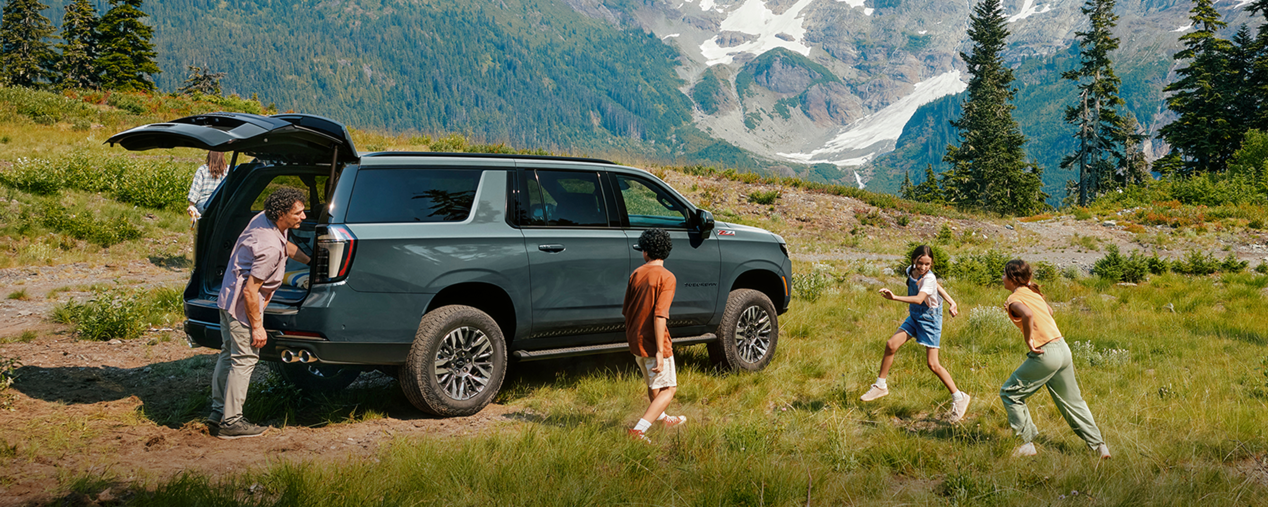
Picking a family SUV in Victorville comes with a few extra considerations drivers in milder climates just don't deal with. Triple-digit summer heat, the long grades of Cajon Pass, and gusty Santa Ana winds that can hit 60 mph all factor into which 3-row SUV actually makes sense for your household. The 2026 Chevrolet Traverse vs 2026 Chevrolet Tahoe vs 2026 Chevrolet Suburban comparison comes up constantly with families across the High Desert who want more room without guessing at specs.
We put together this breakdown to help you compare real numbers side by side. If you'd rather see these SUVs in person, you can browse our new vehicle inventory at Victorville Chevrolet anytime.
Traverse vs Tahoe vs Suburban: Quick Comparison
These are the specs that matter most for High Desert families.
Passenger Space and Seating Comfort for Daily Routines
Seating capacity is where the Traverse starts to fall behind its bigger siblings. It seats up to eight with the LT's second-row bench, while the Z71, RS, and High Country trims seat seven with captain's chairs instead. Step up to the Tahoe or Suburban and you're looking at seating for up to nine, depending on trim and second-row layout, since both ride on GM's larger full-size SUV platform.
The size difference between Traverse and Tahoe isn't dramatic on paper, but it shows up in how the cabin feels day to day. The Tahoe's Independent Rear Suspension lowers the floor and opens up legroom, especially for third-row passengers who'd otherwise feel cramped on the Traverse. The Suburban goes further still, stretching to 226.3 inches in length, about 16 inches longer than the Tahoe, which translates directly into more usable space for passengers and gear alike.
Third-Row Room for School Runs and Carpools
If your third row sees regular use for carpools between Victorville and Apple Valley, the difference matters. The Traverse's third row works fine for occasional trips or shorter kids, but adults will notice tighter knee room on longer drives. The Tahoe's IRS-enabled lower floor gives third-row riders noticeably more comfort, and the Suburban's extra length makes that row genuinely usable for adults on a regular basis, not just in a pinch.
Cargo Space for Sports Gear and Weekend Trips
Cargo space is often the deciding factor once families start comparing Tahoe vs Traverse cargo space for weekend trips to Barstow or beyond. The Traverse offers 22.9 cubic feet behind the third row, expanding to 56.6 cubic feet behind the second row and up to 97.6-98 cubic feet with everything folded flat. That's plenty for hauling strollers and gear on a typical errand run.
The Tahoe steps that up to 25.5 cubic feet behind the third row and 122.7 cubic feet maximum. The Suburban vs Tahoe cargo comparison is where things get interesting: the Suburban's 41.5 cubic feet behind the third row and 144.5 cubic feet maximum make it the clear pick for families hauling gear for extended trips without folding down seats.
Towing Confidence for High Desert Recreation
Towing in the High Desert isn't the same as towing at sea level. Climbing Cajon Pass with a loaded trailer puts real strain on an engine and cooling system, and triple-digit heat only adds to that load. Crosswinds along I-15 toward Barstow can also introduce trailer sway, which is why the towing tech built into these SUVs matters just as much as the raw numbers.
Traverse Towing for Light Trailers and Gear
The Traverse is rated to tow up to 5,000 pounds, which covers a lot of ground for families hauling a small camper, jet skis, or gear for weekend outings near Silverwood Lake. Its 8-speed automatic and available AWD handle light loads confidently, but it's not the one we'd point toward for anything heavier than a modest utility trailer, especially on the grades leading up Cajon Pass.
Tahoe and Suburban Towing for Boats and Bigger Loads
The Tahoe is rated to tow up to 8,400 pounds and the Suburban up to 8,200 pounds, both achieved with the standard 5.3L V8, rear-wheel drive, and the Max Trailering Package, with the available 6.2L V8 and Duramax 3.0L Turbo-Diesel offering strong alternatives depending on how you plan to use them. Chevrolet equips both with a seven-wire harness, seven-pin connector, Hitch Guidance, and trailer sway control.
Those features matter a great deal when Santa Ana gusts hit the side of a trailer on the way to Lake Havasu or Big Bear. If you're hauling a boat or camper regularly, this is the point in the towing conversation where it's worth a closer look. You can schedule a test drive to feel the difference yourself.
Comfort, Technology, and Ride Quality on Long Desert Drives
Long stretches of I-15 toward Barstow test a vehicle's comfort just as much as its towing specs. All three SUVs come with a 17.7-inch touchscreen and Google Built-In, so navigation, Google Assistant, and wireless Apple CarPlay or Android Auto are standard across the lineup. Chevrolet Safety Assist comes standard as well, and Super Cruise is available across all three models for hands-free driving on more than 750,000 miles of compatible roads, a real advantage on long, straight desert highways.
Where they differ is ride quality. The Tahoe offers available Magnetic Ride Control and Four-Corner Air Ride Adaptive Suspension, technology that reads the road up to 1,000 times per second and adjusts damping accordingly. The Suburban extends Air Ride Adaptive Suspension to the RST trim for the first time in 2026, alongside Magnetic Ride Control standard on Premier and High Country trims. Both systems help smooth out the rough, sometimes unpaved roads common around Adelanto and outlying High Desert communities, while keeping the cabin stable during crosswind gusts.
Matching Each Model to Your Household Needs
Once you've weighed cargo, towing, and comfort, the right choice usually comes down to how your household actually uses the vehicle week to week.
Traverse: Smart Fit for Everyday Families
Choose the Traverse if your daily routine centers on school drop-offs, errands around Victorville, and occasional weekend trips with light gear. Its smaller footprint makes it easier to park and maneuver, and towing up to 5,000 pounds covers most trailers and small boats without stepping up to a full-size SUV.
Tahoe: More Space and Power for Growing Households
Choose the Tahoe if your family has outgrown the Traverse but doesn't need the Suburban's full length. With towing up to 8,400 pounds, more third-row room thanks to its Independent Rear Suspension, and available diesel power rated for an estimated 624 highway miles per tank, the Tahoe suits growing households that tow boats or campers on a regular basis.
Suburban: Maximum Room for Big Families and Long Hauls
Choose the Suburban if you're regularly hauling a full house of passengers and gear on long hauls. Stepping up from Tahoe to Suburban gains you roughly 16 additional inches of length, dedicated cargo room behind the third row, a higher payload rating of 1,977 pounds, and a towing capacity of 8,200 pounds (200 pounds less than the Tahoe's 8,400 pounds). For families making frequent runs to Barstow or beyond with everyone and everything in tow, that extra room shows up fast once you actually load the vehicle.
Find Your Ideal 3-Row SUV at Victorville Chevrolet
Whichever model fits your household, all three are engineered by GM to handle High Desert driving, from Cajon Pass grades to the open highway stretches near Barstow. As a dealership that specializes in Silverado trucks alongside a full lineup of new Chevrolet vehicles, we know the Traverse, Tahoe, and Suburban well, and our factory-certified service team is equipped to keep them running long after you drive off the lot.
Ready to Compare Them in Person?
If you're ready to compare the Traverse, Tahoe, and Suburban side by side, explore our current inventory or check out our financing options to see what fits your budget. Our team at Victorville Chevrolet is ready to help you find the 3-row SUV that matches your family's needs, without the pressure.
Frequently Asked Questions
Which Chevrolet SUV has the most cargo space?
The Chevrolet Suburban has the most cargo space of the three, providing 41.5 cubic feet behind the third row and up to 144.5 cubic feet with the rear seats folded. The Tahoe offers up to 122.7 cubic feet, while the Traverse provides approximately 97.6-98 cubic feet.
Which can tow more: the Traverse, Tahoe, or Suburban?
The Chevrolet Tahoe has the highest maximum towing capacity at up to 8,400 pounds when properly equipped. The Suburban can tow up to 8,200 pounds, while the Traverse can tow up to 5,000 pounds with the necessary trailering equipment.
Is the Traverse or Tahoe better for everyday family driving?
The Traverse may be the better everyday choice for families that prioritize easier parking, maneuverability, and three-row seating without needing full-size towing capability. The Tahoe provides more passenger room, greater towing capacity, and additional full-size SUV capability.
Does the Chevrolet Suburban have more third-row space than the Tahoe?
The Tahoe and Suburban both provide adult-friendly third-row seating, but the Suburban's longer body creates substantially more cargo room behind the third row. This makes it particularly useful for families that need to carry passengers and luggage at the same time.
Is Super Cruise available on the Traverse, Tahoe, and Suburban?
Super Cruise is available on select configurations of the Chevrolet Traverse, Tahoe, and Suburban. Availability depends on the model, trim, options, and equipment selected.
Categories:
Model Comparison